
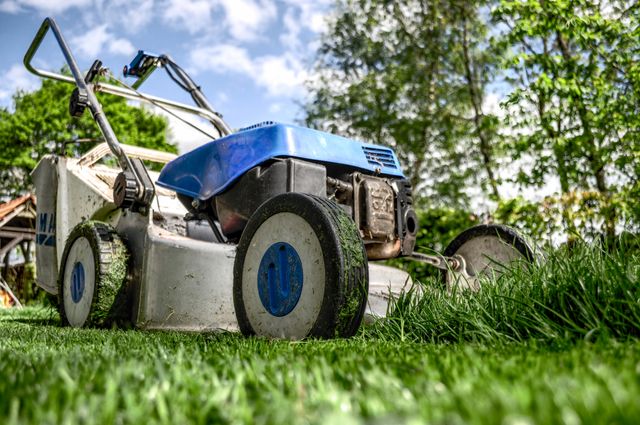
A landscaping business in Calgary has roughly five or six months of serious revenue-generating weather per year. Not five or six months of activity. Five or six months where the work is heavy enough, consistent enough, and well-paid enough to carry the year. The equipment that makes that window productive is used hard. And it gets replaced or expanded at exactly the moment when cash flow is at its most stretched.
Spring is when the phones ring, when the truck needs a transmission and when the new mowing deck would immediately pay for itself. It is also when the account is at its lowest after winter.
The Equipment-Revenue Timing Problem
Seasonal businesses that own their equipment outright spend their capital in the fall or winter, sit on that capital through the slow months, and then generate revenue in spring and summer. The alternative, using landscaping equipment financing, keeps that capital available for the months when it is needed for payroll, fuel, and operational costs, while the equipment payments align with the revenue the equipment is actually generating.
This is not a complicated financial principle. It is just matching cash outflows to cash inflows. But for seasonal businesses, the mismatch between equipment cost and equipment revenue is significant enough that getting it wrong creates real operational pressure.
Flexible Terms Are Not a Luxury for Seasonal Businesses
Standard financing terms assume monthly payments of a consistent amount across twelve months. For a business that earns eighty percent of its revenue between April and October, a payment structure that does not account for that reality creates cash flow problems in November through March every year without exception.
Some financing providers offer seasonal payment structures where payments are higher during the revenue season and lower or deferred during the slow months. This is not a special accommodation. It is a recognition of how seasonal businesses actually operate, and it is worth asking for explicitly rather than assuming it is not available.
Growth Decisions Made in Winter
The best time to expand a landscaping operation is before the season starts. Hire the crew, acquire the equipment, be ready when the calls come. But before the season is exactly when cash is tightest. Financing that is arranged in winter, drawn on in spring, and paid down through the summer and fall turns the timing problem into a planning advantage.
Conclusion
Seasonal businesses are not poorly managed because their cash flow is uneven. Their cash flow is uneven because their industry is seasonal. Financing structured around that reality produces better outcomes than financing designed for businesses with steady monthly revenue. The question worth asking is not whether to finance equipment but whether the terms match the actual revenue calendar.